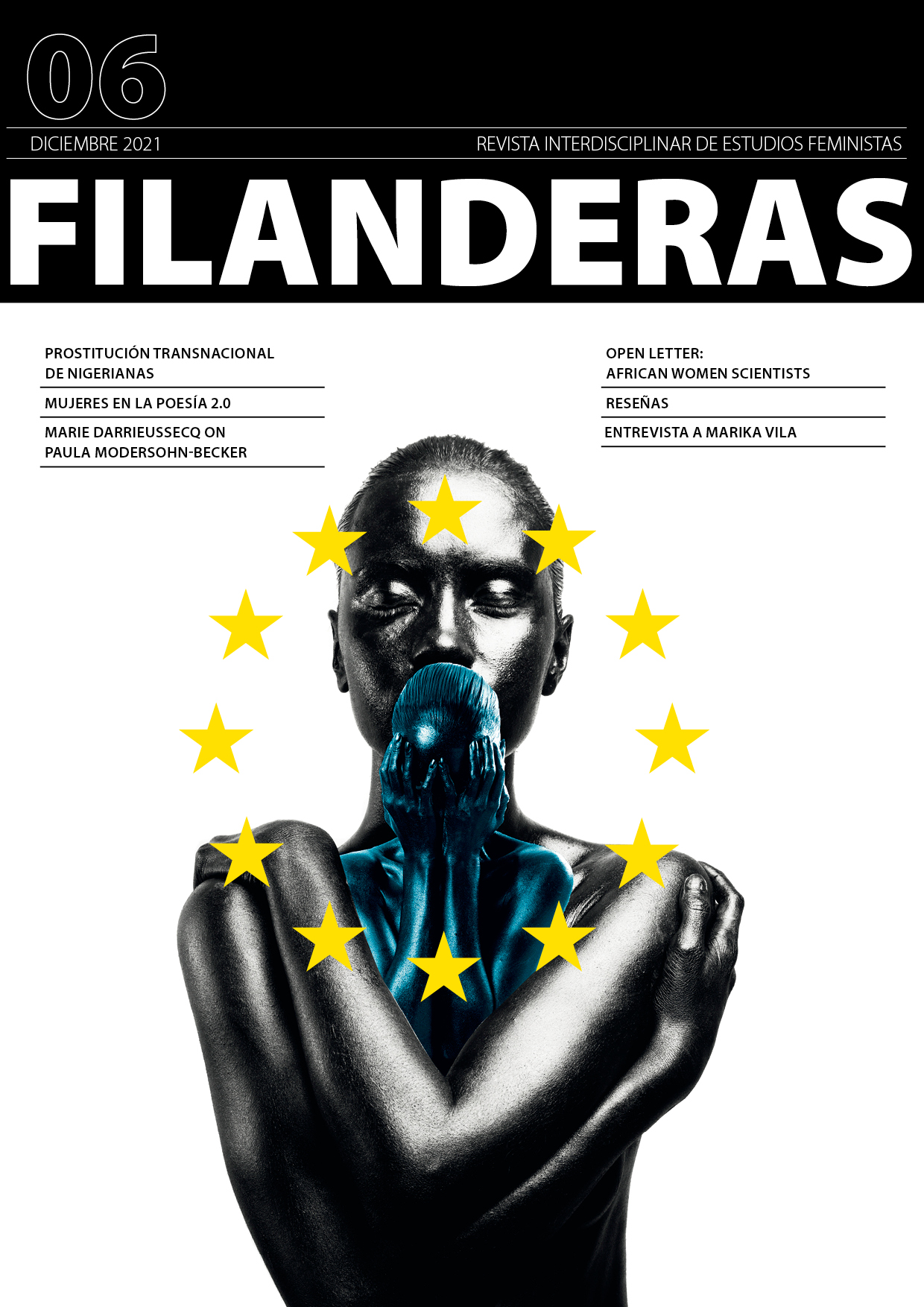
AN OPEN LETTER FROM AN AFRICAN WOMEN SCIENTIST TO RESEARCH ETHICS COMMITTEES
DOI:
https://doi.org/10.26754/ojs_filanderas/fil.202166263Keywords:
Female scientist, Challenges, Gender equality, Female solidarity, EthicsAbstract
With inspiring backgrounds, challenges, rich and diverse experiences, African women in science have proven that gender does not matter as long as you have the will and passion. But how many of these women today are recognised for their daily work? From the difficulty of evolving in a male-dominated environment to the challenges of entering a new field, many are the challenges African women face in finding their place in science. African women scientists face the hardship of being a female scientist every day and of being considered the weaker sex. It would be very useful to strengthen the networks of women scientists by facilitating access to information for women scientists and to get them to support each other and, specially, to the younger ones who want to pursue a career in science. African women scientists deserve to be protected in their scientific activities by applicable and binding texts. This is a letter read by its author to members of the Aragón Research Ethics Committee and of the National Ethics Committees of Benin, Guinea Bissau, Guinea Conakry, Mali and Senegal during the opening of the University of Zaragoza-led 2nd International Congress on the Harmonisation of Gender Mainstreaming in West Africa.
Downloads
Downloads
Published
Issue
Section
License
Copyright (c) 2021 Esther Deguenon

This work is licensed under a Creative Commons Attribution-NonCommercial 4.0 International License.
Authors who publish in this journal agree to the following terms:
They retain authorship rights and grant the journal the right to be the first publication of the work as well as license it under a Creative Commons Attribution-BY-NonCommercial 4.0 International that allows others to share the work without any commercial purpose and an acknowledgement of authorship of the work and initial publication in this journal. As the Creative Commons standards define, "this license enables reusers to distribute, remix, adapt, and build upon the material in any medium or format for noncommercial purposes only, and only so long as attribution is given to the creator. CC BY-NC includes the following elements:
- BY: credit must be given to the creator.
- NC: Only noncommercial uses of the work are permitted".