Between silence and cream, fantasy: polyponies in the work of Ana María Matute. The green grasshopper and Pinocchio's cricket
DOI:
https://doi.org/10.26754/ojs_ondina/ond.20251012619Abstract
The emblematic song of the cricket and its capacity for communication and transformation is in line with the symbolism of the siren song. The duality of its literary representation converges with that of Pinocchio’s cricket and the spirit of the puppet boy. The desires of Carlo Collodi’s Pinocchio to achieve humanity and that of Yungo to find his stolen voice in Ana María Matute’s Saltamontes verde are brought together in these pages to study the intertextual and literary relationships between these voices. Alongside these authors, there are notable convergences in their poetics with Hans Christian Andersen and his desire to be a dancer, James Matthew Barrie with his Peter Pan, Lewis Carroll with Alice in Wonderland, Antoine de Saint-Exupéry and Le Petit Prince, Philip Pullman and his daemon, and even Carlos Bribián with Pinocho blues and its double character. Similarly, Matute’s extensive work contains noteworthy themes that are explored in this article, such as ecofiction, death, and dystopias. Autofictional narration coexists in these stories with their overflowing fantasy as a refuge, and the broad transmediality in The Adventures of Pinnochio is remarkable in all literary, graphic, and cinematographic genres.
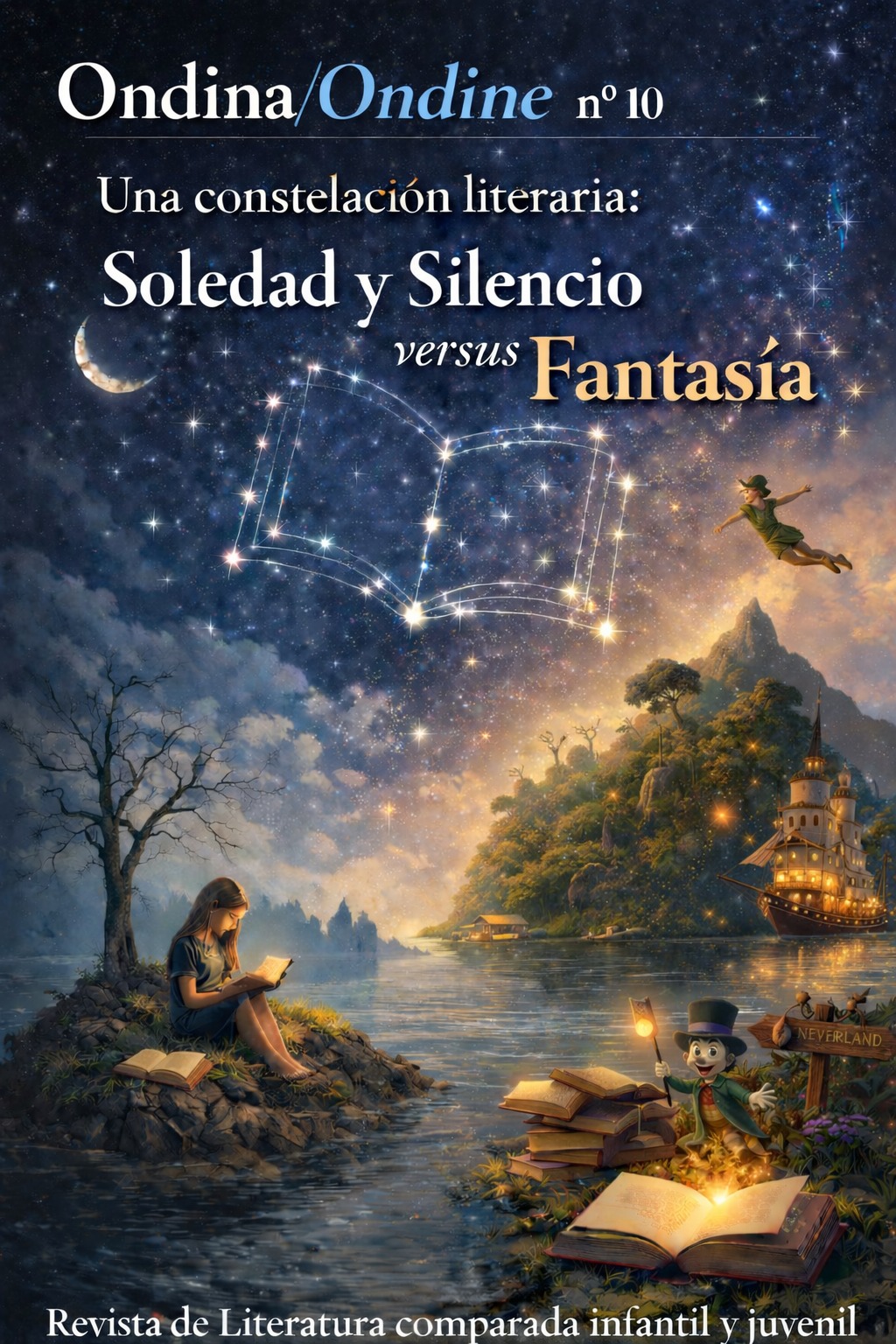
Our thesis is based on the conviction that Ana María Matute’s universe and her poetic philosophy are shared by a number of authors. The themes and authors discussed above form a brilliant and authentic literary constellation in the world of universal youth literature that moves energetically with its own voice. Based on these premises, a working hypothesis is formulated. This literary constellation (following Guadalupe Jover) is embodied in the literary desire of all the authors cited to show in their writing their own childhood, loneliness, violence, abuse and the tendency towards dehumanisation suffered by children in silence, without a voice. Numerous convergences emerge and some questions arise in the research: where is the boundary between humanity and animality in children’s and young adult literature? Why does writing, which can sometimes be therapeutic, create places such as those we know: “Neverland”, “The Beautiful Country”, “The Land of Games”, “The Land of the Blackboard”, “The Land of Bare Feet”, “Uninhabited Paradise” or “The Forest of Illusion”? In terms of methodology,
a comparative study is carried out between Matute and Collodi, mainly between two works: The Green Grasshopper and The Adventures of Pinocchio. In addition, the comparison includes a selection of works (listed above) in which the problems posed by the hybridity of literary genres in the different works are also analysed, as well as intertextuality, transmediality, ecofiction and autofiction. Sociopoetic and thematic and symbolic or metaphorical criteria are the most appropriate.
The conclusions reached reinforce the cohesion in this literary constellation: Between Silence and Scream, Fantasy. The readings linked together in this plural literary system show the denunciation, the cry of their own lives and literature as a weapon of salvation through Fantasy in literary fiction. All the paradises created with enthusiasm by and for children are literary refuges from the loneliness and traumas suffered by their creators in their childhood, coinciding with what Jack Zipes theorised in his brilliant research on abuse, violence against children and dehumanisation. Zipes proposes breaking the
spell and provides a political vision of folk and fairy tales.
Keywords: polyphonies, animality/humanity, Ana María Matute, The Green Grasshopper, The Adventures of Pinocchio
Downloads
References
Andersen, H. C. (1999). "Cuentos de Andersen". Anaya. Introd. De Gustavo Martín Garzo. 3ª ed. 2003.
___ (2003). El cuento de mi vida sin literatura. Autobiografía parcial en "Andersen" (2003), Anaya. pp.241-269.
Bartolozzi, S. (2004). "Pinocho". EDAF, S.A.
___(2004) "Les aventures de Pinocchio", Biografía y comentario de Mª del Mar Lozano Bartolozzi, Ed. Saturnino Calleja avec la couverture de Bartolozzi.
Books Limited, C. (2011). "Las aventuras de Pinocho". Ilust. Zdenko Basic con Manuel Sumberac, adpt. Stella Gurney. Pirueta.
Bribián, C. (2010). "Pinocho Blues". Glénat.
Chevalier, J. et Gheerbrant, A. (1986). "Diccionario de los Símbolos". Herder.
Collodi, C. (1990). "Les aventures de Pinocchio", Daniela Marcheschi, « Introduction », Traduction de l'introduction, la Chronologie et les notes par Béatrice Arnal, Albin Michel Jeunesse.
___ (2015). "Les aventures de Pinocchio", illustré par Roberto Innocenti traduit en espagnol en 2005. Kalandraka.
Cortés, A. (2025). Ana María Matute et son univers particulier, à l'Institut Cervantes de Madrid. "Atalayar. Entre deux rives". https://www.atalayar.com/fr/articulo/culture/ana-maria-matute-et-son-univers particulier-linstituto-cervantes-madrid/20250113123720209824.html . Fecha de consulta 20-10-2025.
Didier, B. (2019). "L’écriture-femme". Presses Universitaires de France. PUF.
Marchesi, D. (1990). « Introduction », "Les aventures de Pinocchio". Albin Michel Jeunesse. Traduction de l’introduction, la Chronologie et les notes par Béatrice Arnal. pp. 7-34.
Andersen, H. C. (1999). "Cuentos de Andersen". Madrid: Anaya. Introd. De Gustavo Martín Garzo. 3ªed. 2003.
Martín Garzo, G. (2003). “Lo que guarda un guisante” Introducción a "Cuentos de Andersen". Anaya. 3ª ed.
Montero Glez, R. (2025). ¿Pueden los conflictos emocionales de la infancia estancar el crecimiento? "El hacha de piedra". El País. 11 de septiembre. https://elpais.com/ciencia/el-hacha-de-piedra/ Fecha de consulta 20-9-2025
Jarnés, B. (Dirección literaria), Doporto, L. (Dirección artística). (1946). El grillo orador. Película, in "El libro de oro de los niños. Un mundo maravilloso para la infancia". Vol. III. Ed. Acrópolis, México, D.F. pp. 160-166.
Jarnés, B. (Dirección literaria), Doporto, L. (Dirección artística). (1946). Pinocho, in "El libro de oro de los niños. Un mundo maravilloso para la infancia". Vol. V. Ed. Acrópolis, México, D.F. pp. 112-130.
Luengo Gascón, E. (2010). «Voces silenciadas y deseo de escritura. La búsqueda de identidad en las poéticas de Ana María Matute y de Andersen: pequeños poemas en prosa en Los niños tontos». En "Pensamiento literario español del siglo XX, 7". Túa Blesa, Juan Carlos Pueo, Alfredo Saldaña y Enric Sullà, eds. Zaragoza. Colección Trópica. "Anexos de Tropelías 20", pp. 77-102. DOI: https://doi.org/10.26754/ojs_tropelias/tropelias.20105509
___ (2015). Érase, es y será... Aprender a ser en las enciclopedias para niños. "Tropelías. Revista De Teoría De La Literatura Y Literatura Comparada", 23, 90-110. https://doi.org/10.26754/ojs_tropelias/tropelias.201523999. Fecha de consulta 10-10-2024. DOI: https://doi.org/10.26754/ojs_tropelias/tropelias.201523999
___ (2019) : “Réécritures cinématographiques des "Aventures de Pinocchio" en Espagne. La fable de la vie humaine : mensonges et vérités” in "Transmédialités du conte", Philippe Clermont et Danièle Henky (éds.), KINDER-UND JUGUENDKULTUR, -LITERATUR-UND-MEDIEN THEORIE-GESCHICHTE-DIDAKTIK 117. Peter Lang. pp. 253-269.
___ (2020). De "Pinocchio à Pinocho blues", roman graphique. Ethique et esthétique des émotions in "Littérature de jeunesse au présent 2". "Genres graphiques en question(s)", direction de Christiane Connan-Pintado et Gilles Béhotéguy, Presses universitaires de Bordeaux, coll. “Etudes sur le livre de jeunesse” pp. 263-276. DOI: https://doi.org/10.4000/books.pub.44815
Matute, A. M. (1960). "El saltamontes verde". Barcelona: ed. Destino. Ilust. Albert Asensio. Primera edición en libro electrónico (epub): abril de 2013.
___ (1966). "Le criquet d'or". Imagé par Colette Fovel, collection Plaisirs des contes.
___ (1982) “Aquel hombre que tantos cuentos sabe”. Prólogo a "La sombra y otros cuentos de Andersen". Traducción de Alberto Adell, Alianza, 2ª edic., [1973].
___ (1998) "En el bosque". Discurso leído el día 18 de enero de 1998, en su recepción pública por la Excma. Sra. Doña Ana María Matute y contestación del Excmo. Sr. Don Francisco Rico. Madrid 1998.
https://www.rae.es/sites/default/files/Discurso_Ingreso_Ana_Maria_Matute.pdf. Fecha de consulta 9-7-2025.
___ (2010) "En el bosque". Discurso de entrega del premio Cervantes a Ana María Matute.
https://www.cultura.gob.es/premiado/downloadBlob.do?idDocumento=3302&prev_layout=premioMiguelCervantesLibro&layout=premioMiguelCervantesLibro&language=es Fecha de consulta 2-7-2025.
___ (2000). "Los niños tontos". Ilust. Javier Olivares. Media Vaca. [1956].
___ (2013). "El saltamontes verde" (Spanish Edition). Grupo Planeta. Edición de Kindle.
___ (2014). "Luciérnagas". Austral, 8ª reimp., 1ª edic en 2011.
___ (2019). "Todos mis cuentos". Debolsillo, [5ªedición, 3ª reimpresión].
Nöstlinger, C. y Saura, A. (2010). "El nuevo Pinocho". Trad. Miguel Sáenz. La Central.
Paronnaud, V. (2010). "Pinocchio". La cúpula.
Prince, N. (2018). "Éco-graphies. Écologie et littératures pour la jeunesse", sous la dir. de Nathalie Prince et Sébastian Thiltgès, Presses universitaires de Rennes, « Interférences ».
Pullman, P. (2017). "La materia oscura I. La brújula dorada". Trad. Roser Berdagué. Roca editorial. 2ª reimpresión 2019.
___ (2017). "La materia oscura II. La daga". Trad. Dolors Gallart. Roca editorial. 1ª reimpresión 2019.
___ (2017). "La materia oscura III. El catalejo dorado". Trad. Dolors Gallart y Camila Batlles. Roca editorial. 1ª reimpresión 2019.
Propp, V. (1992). "Morfología del cuento folclórico". Editorial Fundamentos.
Redondo Goicochea, A. (1994). “Un dolorido vivir”, entrevista a Ana María Matute, en Alicia Redondo Goicochea (2009) pp.144-152.
___ (2009). "Mujeres y narrativa. Otra historia de la literatura". Siglo XXI.
Riaño, P. H. (2010). Entrevista a Ana María Matute: “Escribir una novela es más fácil que un relato”.
"Público", jueves, 11 de noviembre de 2010, p. 41. www.PUBLICO.ES
Zipes, J. (2001). "Romper el hechizo. Una visión política de los cuentos folclóricos y maravillosos". Lumen.
Downloads
Published
Issue
Section
License
Copyright (c) 2025 Elvira Luengo Gascón

This work is licensed under a Creative Commons Attribution 4.0 International License.

Creative Commons License 4.0.
Los autores son los depositarios del copyright Creative Commons